
 The Department of Tourism (DOT) in collaboration with Go Negosyo and other partners like the ASEAN Business Advisory Council, Department of Foreign Affairs, Tourism Board of the Philippines, Philippine Chamber of Commerce and Industry and the Filipino Chinese Chamber of Commerce and Industry , conducted the country’s First National Tourism Summit last 02 May 2019 held at the World Trade Center in Pasay City.
The summit focused on how to create a more integrated tourism industry not just in the Philippines, but across the ASEAN region. The goal is to achieve sustainable island tourism that will contribute to the socio-economic growth of the region. Speakers and experts from different countries shared their insights and best practices on how to achieve this goal.
As such, the country’s tourism industry was identified as one of the pillars for greater inclusive growth. The DOT is confident that there will be around 8.2 million tourists this year; a 15% increase from last year’s 7.1. million tourists. This signals an increased demand for products and services, which can be supplied by our entrepreneurs from different sectors, thus, contributing livelihood and sustainable income for more Filipinos.
As an inclusive sector, tourism extends not just to the services provided by airlines and travel agencies, but includes other industries such as culinary, retail, transportation, logistics, medical and agriculture. As tourism booms, more and more businesses can flourish and cater to the growing needs of travelers. Indeed, a boost in tourism is a boost in our economy- more tourists, more of the much needed revenue for the economy.
Hence, all kinds of businesses, whether micro, small or medium will gain from the sector’s inclusivity, including those in far flung tourist spots in the country. More diverse products, services as well as culture will be offered from these beautiful places in and around the country. GTM
 It is therefore necessary for regulatory agencies to undertake the RIA process which involves problem definition, setting the objectives, identifying options (from doing nothing or status quo to other options), impact analysis (cost-benefit analysis), comparing options, and implementation and monitoring.
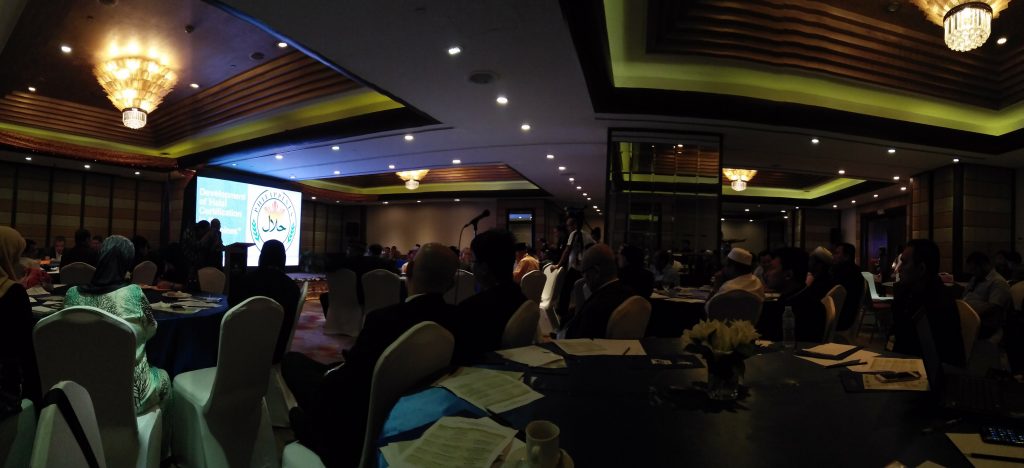 Government efforts for the development and promotion of Philippine Halal Industry are underway to tap the rising demand on Halal products and services. The halal food industry is estimated to reach 3 trillion in 2021 that can be tapped by the Philippines.
 Professor de l’Etraz emphasized that 90% of all successful ideas today are improvements of something that already exists. He added that decision making needs to move from gut feel and instinct to data-driven decisions.
 Senator Gatchalian noted that the government can implement the Senate’s proposed coal tax increase once the retail competition and open access (RCOA) system is in place. RCOA is the retail competition open access in which when the consumer will be given the power to choose, to buy wherever he wants. The RCOA is one of the provisions under the Electric Power Industry Reform Act of 2001 (EPIRA).