
 The National Economic and Development Authority’s (NEDA) plan gets a GO, pursuant to the Inter-Agency Task Force (IATF) Resolution No. 24 dated 15 April 2020 – acquiring the approval to develop a Supply Chain Analytics (SCAn) dashboard, and to conduct a Regulatory Impact Assessment (RIA).
The main objective of the SCAn dashboard is to provide up-to-date, real-time information to the IATF on existing supply chain and logistics issues, and potential solutions to aid them in making relevant and timely actions and decisions. Information in the SCAn dashboard will be generated from different subnational stakeholders through a Networks Hub.
The Networks Hub is consisted of, but not limited to Philippine Chamber of Commerce and Industry (PCCI), Supply Chain Management Association of the Philippines (SCMAP), Philippine Exporters Confederation Inc. (PHILEXPORT), and Export Development Council’s Networking Committee on Transport and logistics (EDC-NCTL), including other government/regulatory agencies such as the Department of Trade and Industry (DTI), Department of Agriculture (DA), and Anti-Red Tape Authority (ARTA).
The RIA on the other hand, will be implemented alongside with ARTA. They will tackle COVID 19 related issuances that have implications to the flow of supply chain to ensure those that can be a burden or threat to the efficient flow of goods will be taken out.
In light of the COVID 19 pandemic that our country is facing, it is crucial to ensure the unhampered, unimpeded flow of goods to secure our supply chain, and to keep the economy going. This collaborative undertaking will be beneficial to preserving the unimpaired flow of goods, and up to the largest extent, mitigate the challenges brought by the COVID 19 to the supply chain.
This initiative is made possible in partnership with the University of the Philippines Public Administration Research and Extension Services Foundation Inc. – Regulatory Support Program for National Development (UPPAF-RESPOND), under the headship of Dr. Enrico Basilio, RESPOND Chief of Party, and EDC-NCTL Chair. – KJDA
 A forum on “Moving Towards Quality Non-Tariff Measures (NTMs) was conducted to advance the goal of quality NTMs in the country, its relevance, and issues stemming from it. It aims to provide updates on measures taken by the government arising from the results of the business survey on NTMs conducted by the International Trade Center (ITC) in 2016, collaborate with key private sector stakeholders on moving towards quality NTMs noting current industry accounts on trade facilitation. In addition, it also aims to foster knowledge and experience sharing among different government agencies that carry out NTMs and its formulation and implementation. Finally, to review the current governance and set gears for an inter-agency collaboration on NTMs.
 On March 17, further operational guidelines under the Inter Agency Task Force for the Management of Emerging Infectious Disease (IATF-EID) concerning the implementation of the “Enhanced Community Quarantine (ECQ)”, ordered that “All government agencies in the Executive Branch are hereby directed to issue accreditation orders to identify their respective skeletal workforces for critical services operating during the duration of the enhanced community quarantine in Luzon…”
 The Department of Agriculture (DA) issued Special Order No. 189, s. 2020, assigning regular personnel of Bureau of Fisheries and Aquatic Resources (BFAR) at the One Stop Export Documentation Center (OSEDC) in Pasay City. Job Order (JO) personnel will also be retained to ensure continuity of service in BFAR-OSEDC.During the Export Development Council (EDC) meeting last 06 February 2020, BFAR informed that the pullout of its JO personnel assigned at the OSEDC is postponed until June 2020. However, the Council argued that the presence of regular BFAR personnel in OSEDC is important to ensure timely issuance of export commodity clearances (ECCs). Data shows that 300 to 400 ECCs are issued every day to exporters of fish and fishery products including shell crafts and ornamental shells. DA Secretary William Dar concurred and instructed BFAR to immediately prepare a Special Order assigning regular personnel and retaining JO personnel in OSEDC.
 “The services export is continuously growing, thus, total exports are projected to increase in single digit percentage.” Export Development Council (EDC) Executive Director Senen M. Perlada reported during the EDC Meeting last 06 February 2020.
 The Department of Trade and Industry (DTI) and Department of Agriculture (DA) show strong support to boost export of agribased products with high global demand. Secretary William Dar of the DA during the Export Development Council (EDC) meeting acknowledged that partnership between DA and DTI is significant in order to supply the demand of export market and to develop other potential crops for export.
 EDC lauds the pronouncement made by the Bureau of Customs (BOC) AOCG Deputy Commissioner Edward Dy Buco that stakeholders can expect enhanced trade facilitation with the Bureau in 2021. He added that the Commissioner assures its support towards export growth by prioritizing export-related activities in the Bureau’s 10-Point Priority Program for the upcoming year.
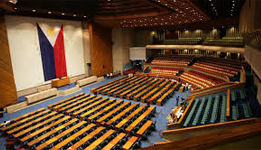 The Export Development Council (EDC) through its Networking Committee on Legislative Advocacy and Monitoring (NCLAM) has prioritized the export sector’s legislative agenda for the 18thCongress to have a more competitive export industry.
 In a recent pronouncement, DTI Secretary Ramon Lopez stated that the Departments of Trade and Industry, Transportation and Finance will issue the Joint Administrative Order (JAO) that will regulate local charges imposed by international shipping lines.